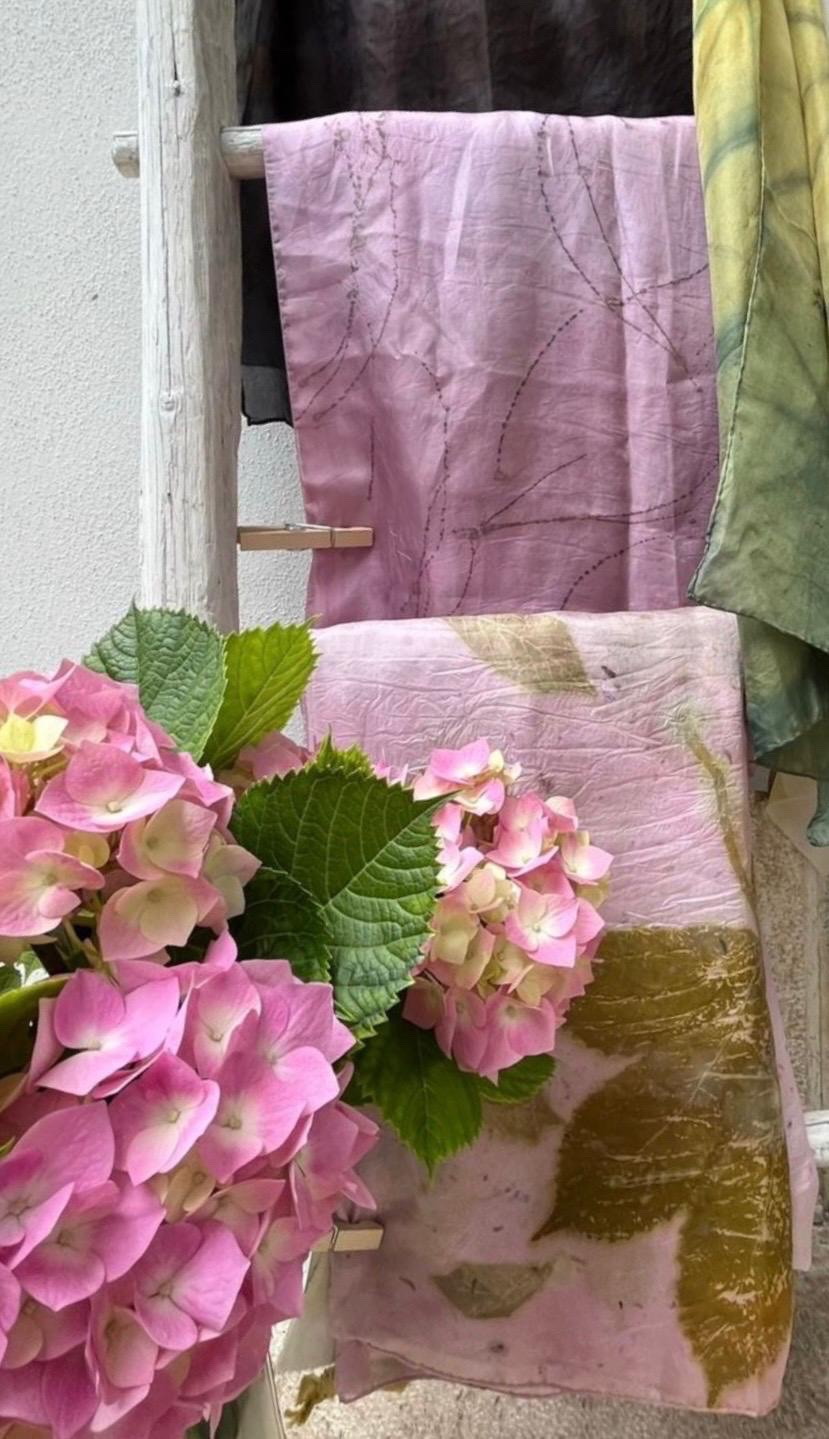
The colour is made by the plants.
We dye silk in the atelier in Arco with leaves, roots, bark and fresh indigo. No synthetic dye, no heavy metals: only rock alum, water from the valley, large pots and low steam. Below is how it is done, from beginning to end.
- Fibre
- Natural silk
- Mordant
- Rock alum
- Colours
- Walnut, madder, indigo, logwood
- Time
- Two to three days per batch
How silk is dyed.
From gathering to pressing: the method has not changed since we opened, and no two baths ever give the same colour twice.
You gather when the plant is ready.
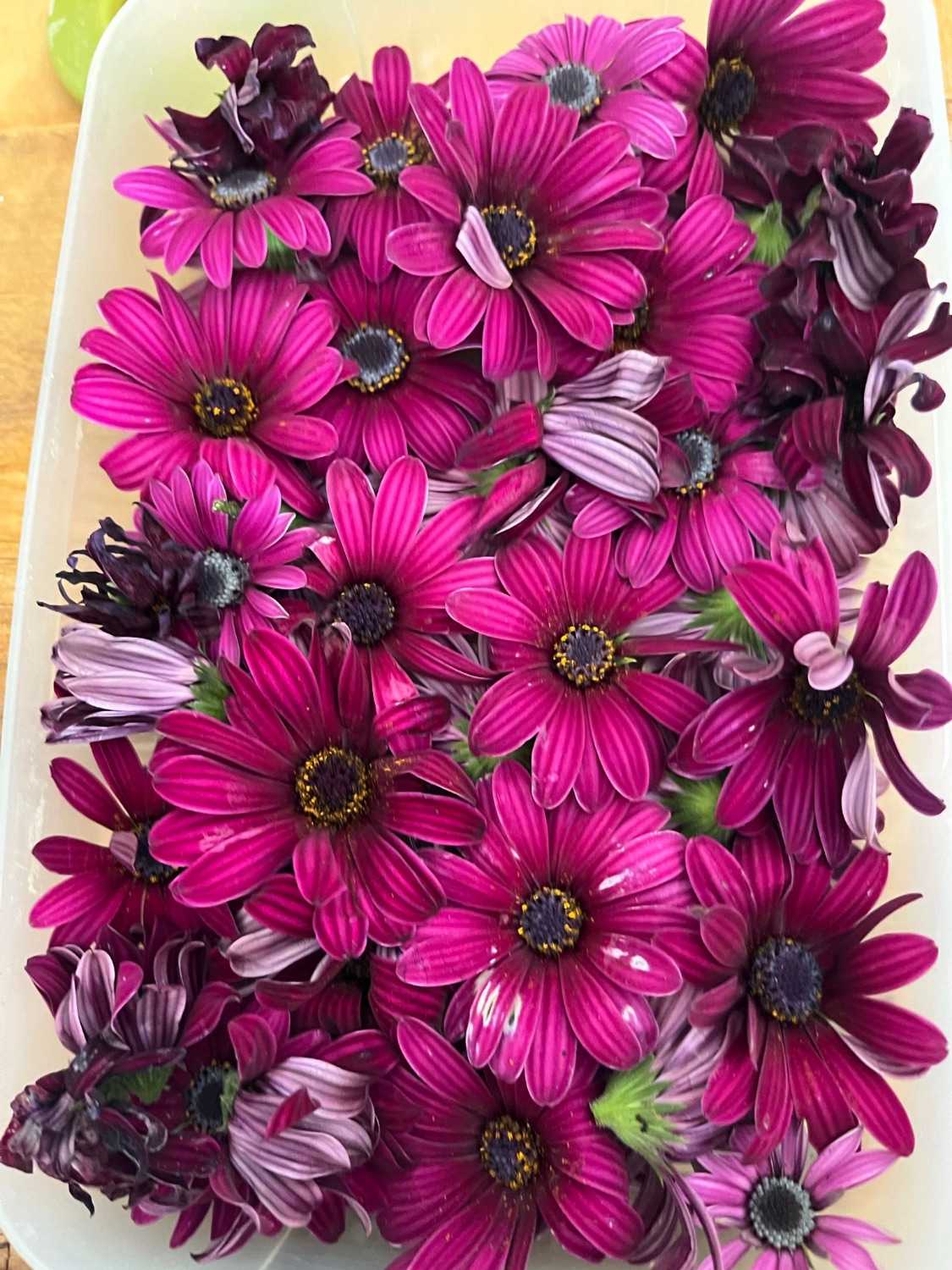
Depending on the season we go into the woods of the Sarca valley, or straight into our own vegetable gardens. September belongs to walnut leaves, March to bark, and high summer to fresh indigo. Betty keeps a notebook of dates and weather: the same plant, gathered a month later, gives you a wholly different colour.
— Walnut in September, bark in March, indigo in summer.
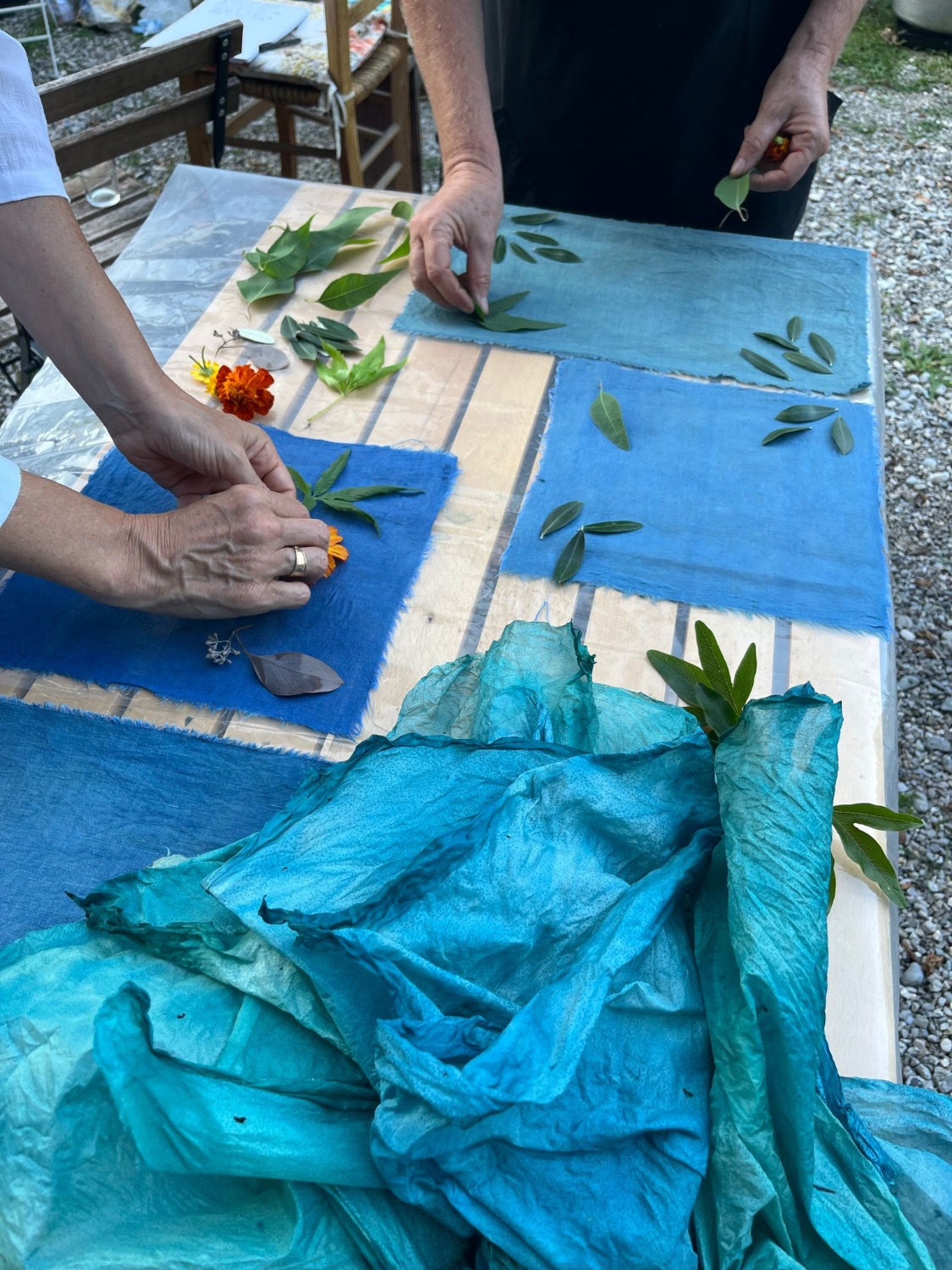
You prepare the fibre to receive.
Before the colour comes the mordant. The silk sits for two hours in warm water with rock alum and cream of tartar: no heavy metals, no chrome. The mordant opens the fibre so the pigment can truly bind. Without this step the colour would leave at the first wash.
— Alum, cream of tartar, two hours.
You draw the colour from the plant.
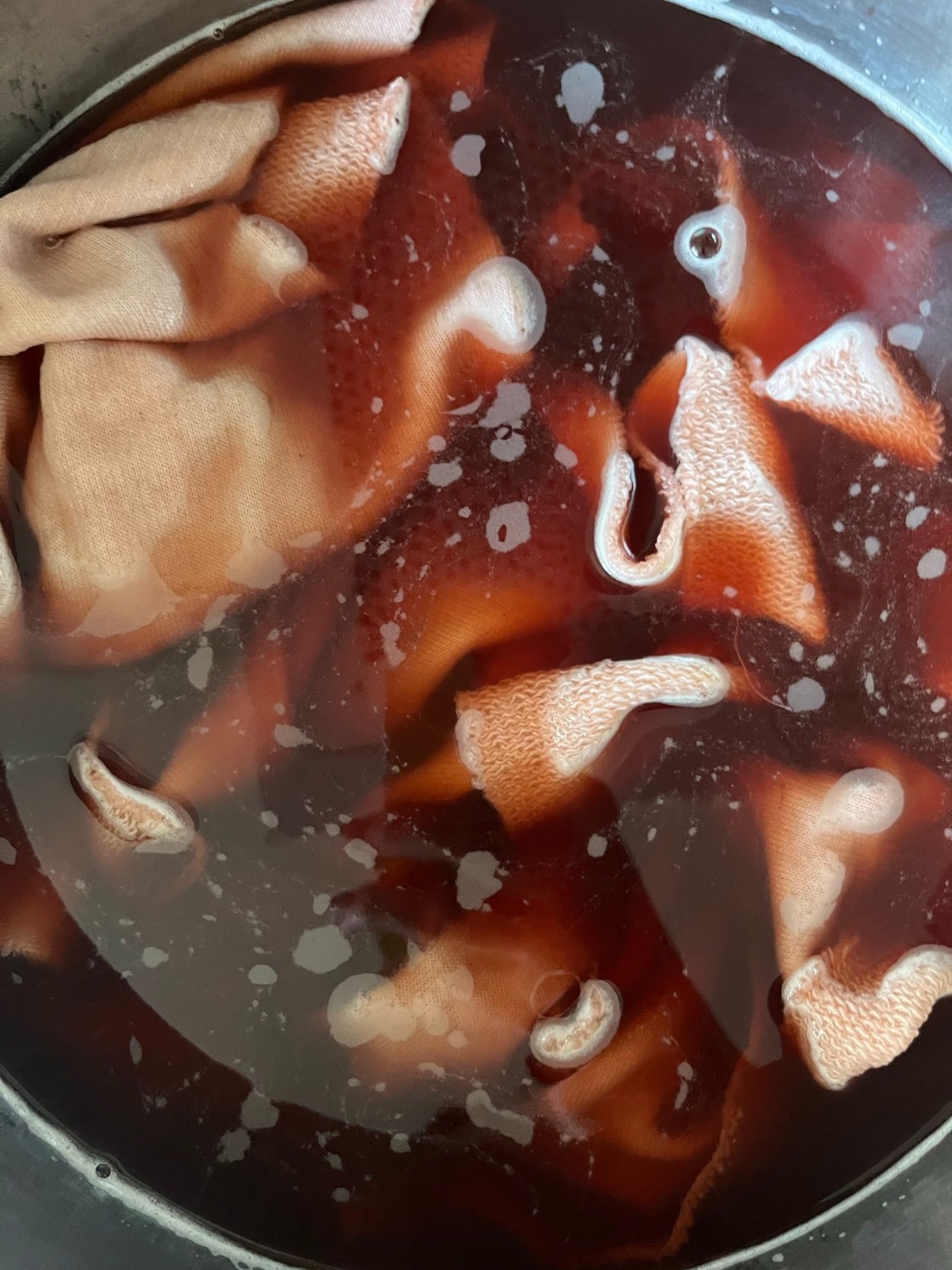
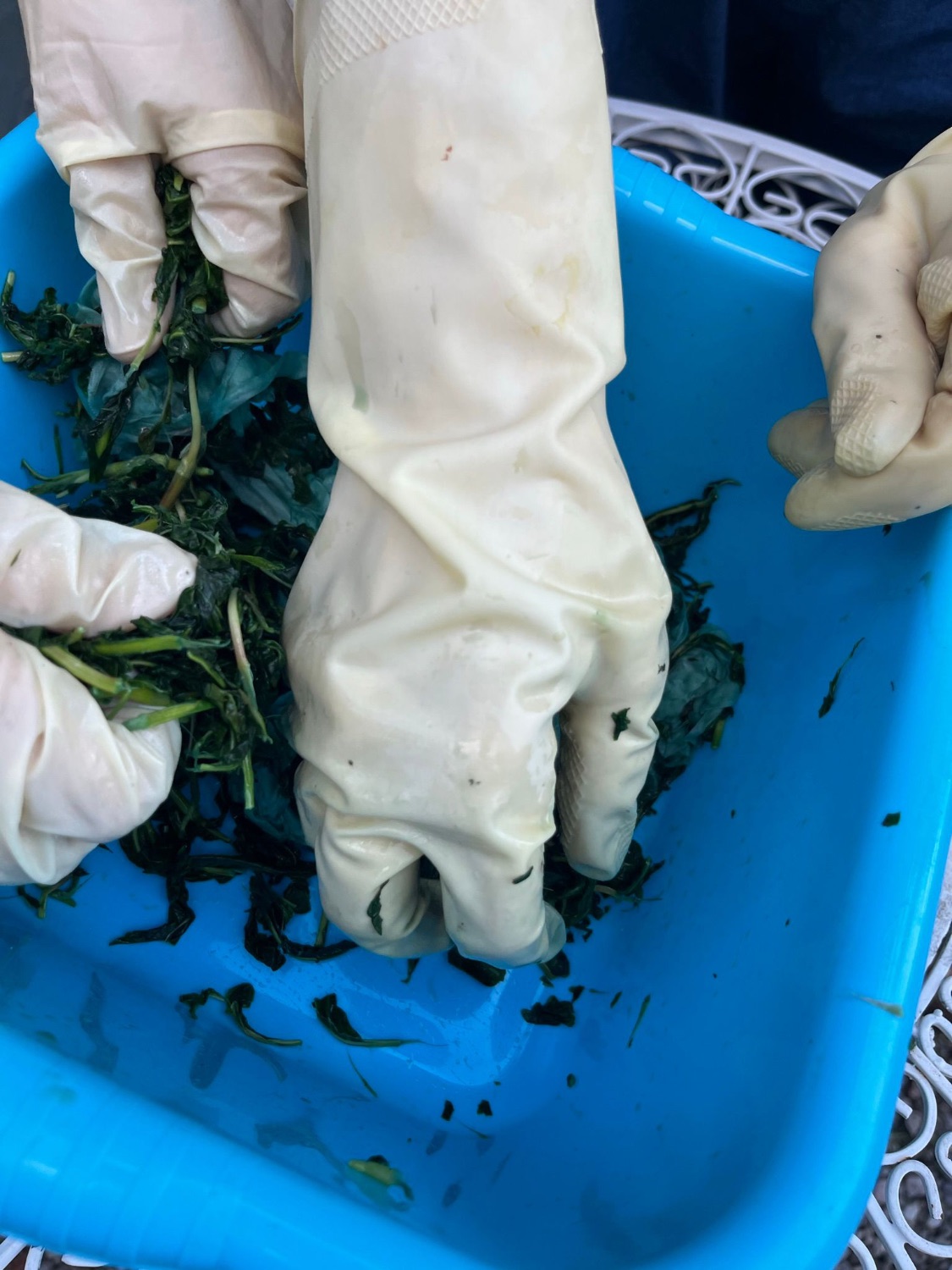
Leaves and roots simmer very slowly for four to six hours, never reaching a full boil: if the water rolls too hard, the colour goes dull. Then everything is strained through a cotton cloth and the pure decoction remains, to be used the same day.
— Four to six hours, never at a full boil.
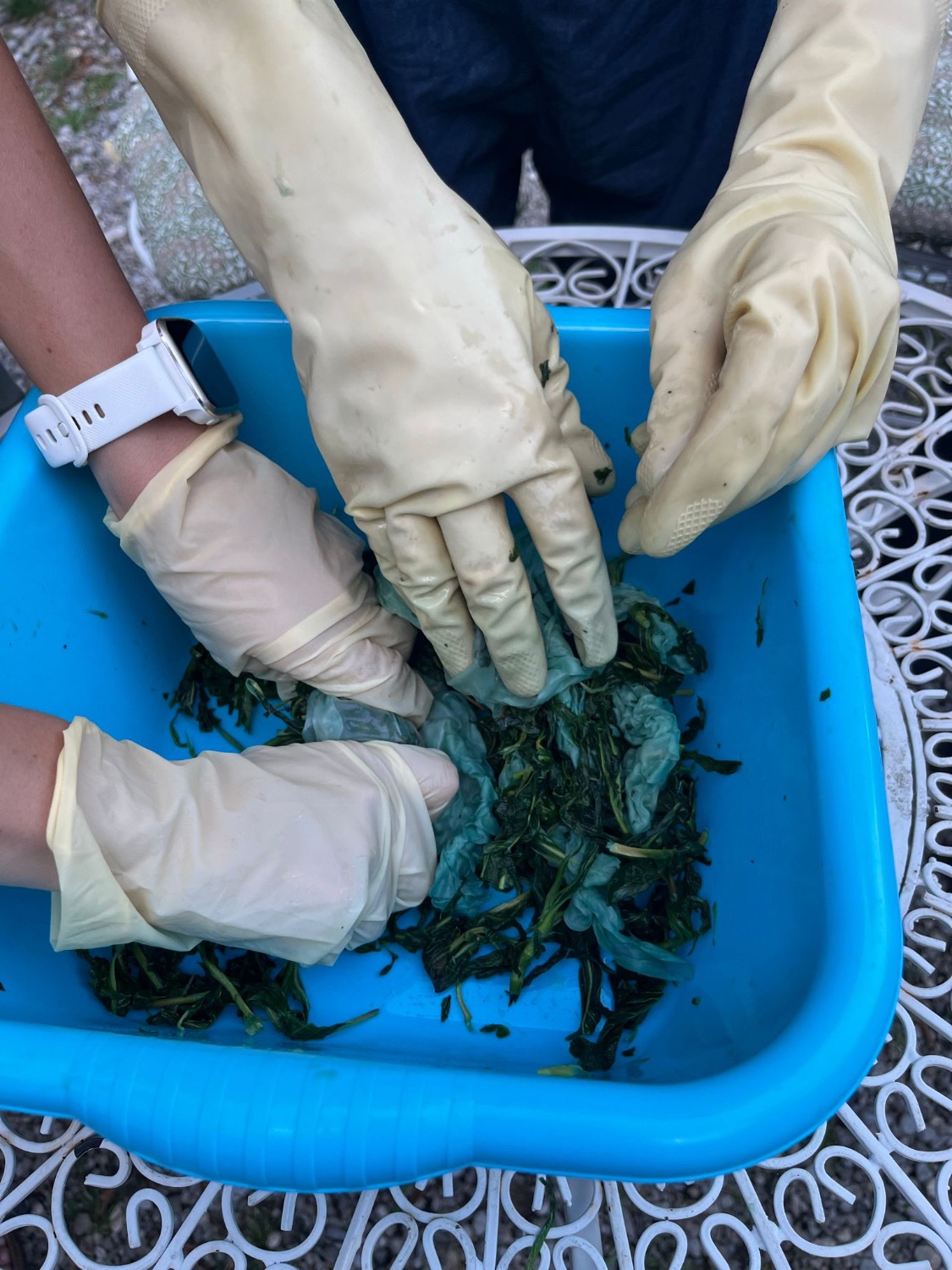
You lower the silk into the vat.
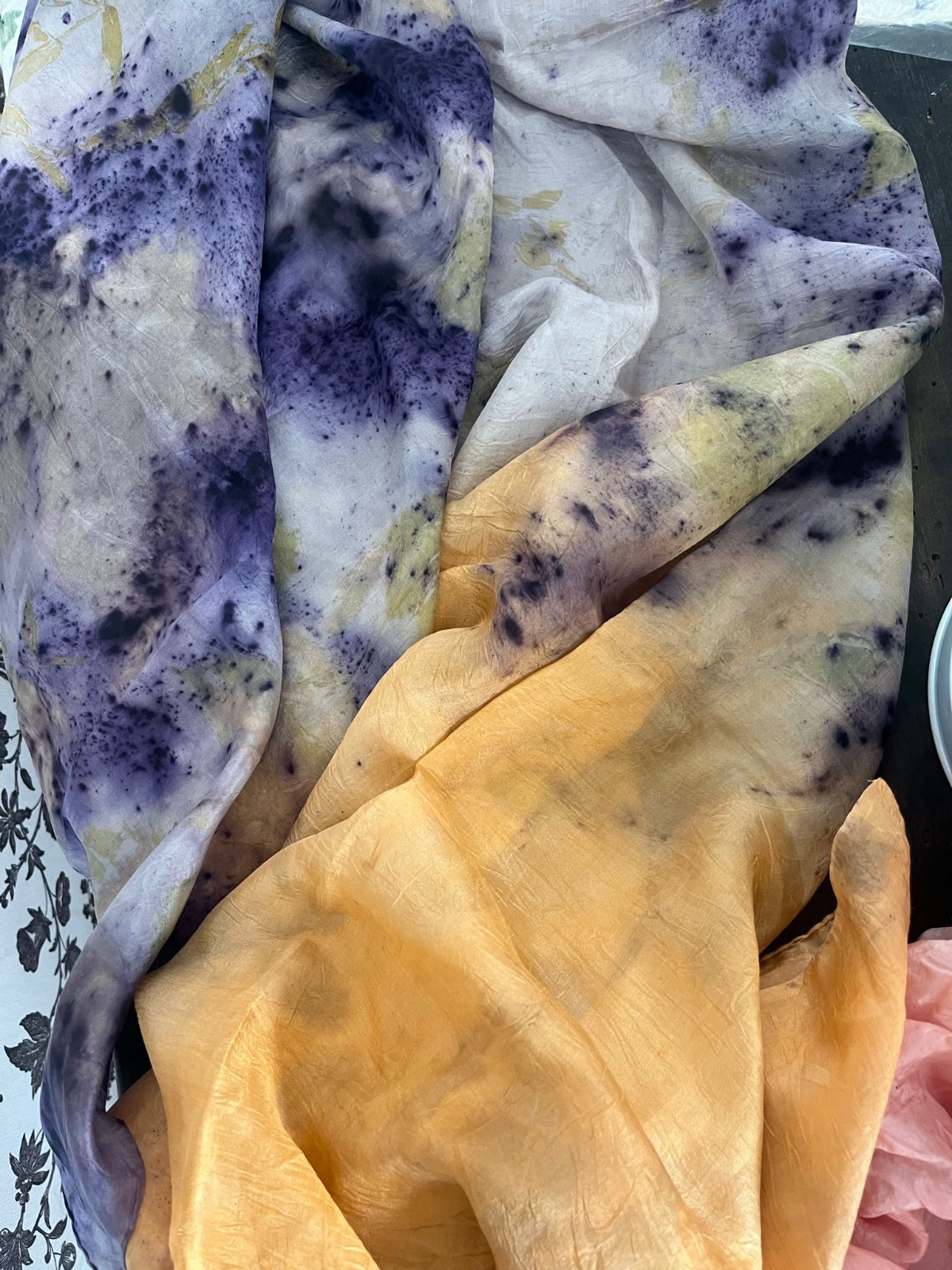
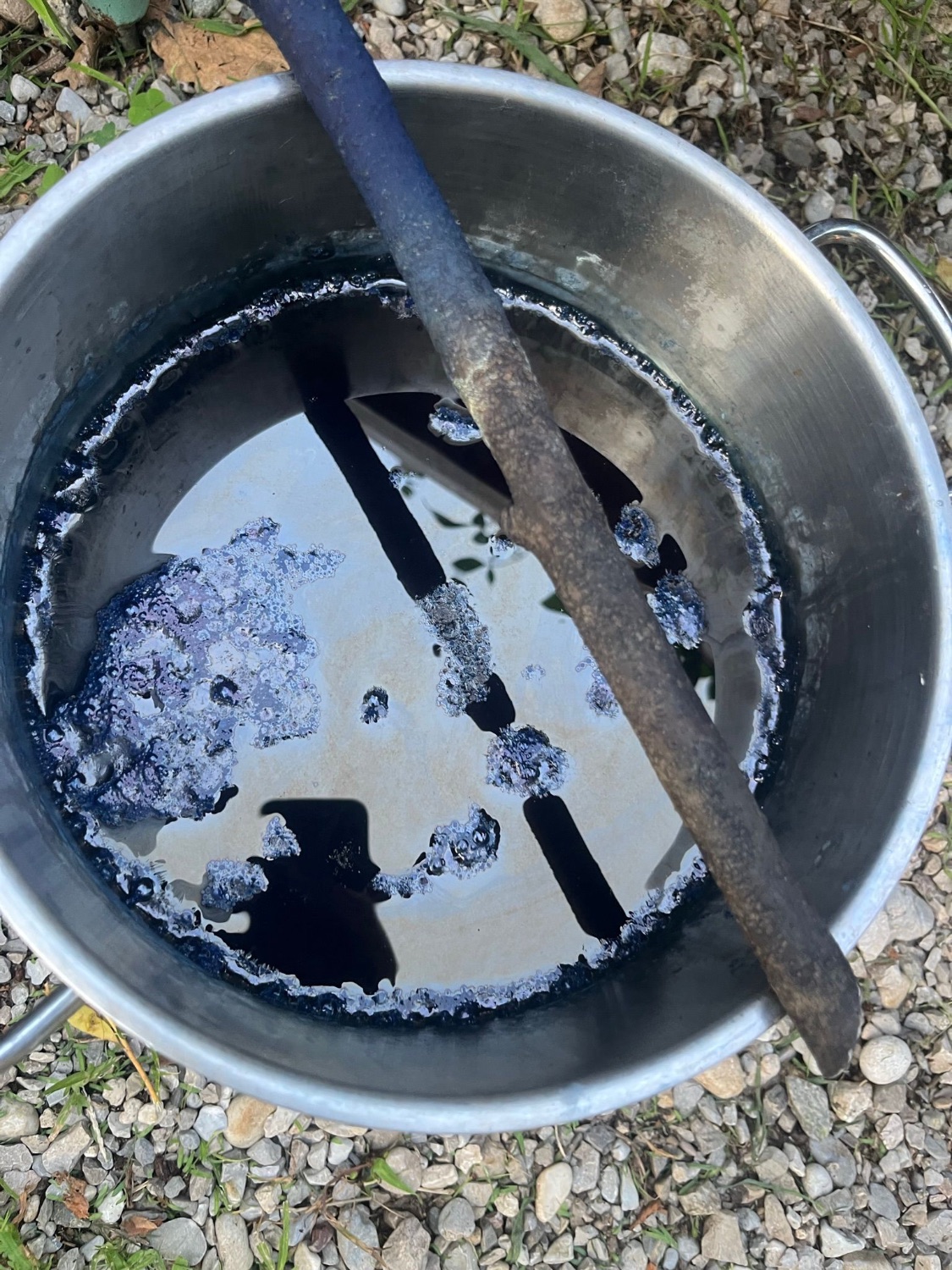
The damp silk goes into the bath and stays from one hour to six, for the deepest browns. Indigo is another matter: it is lowered and lifted several times, always turned the same way, and the green of the vat becomes blue only when it meets the air.
— From one hour to six. Indigo, in several dips.
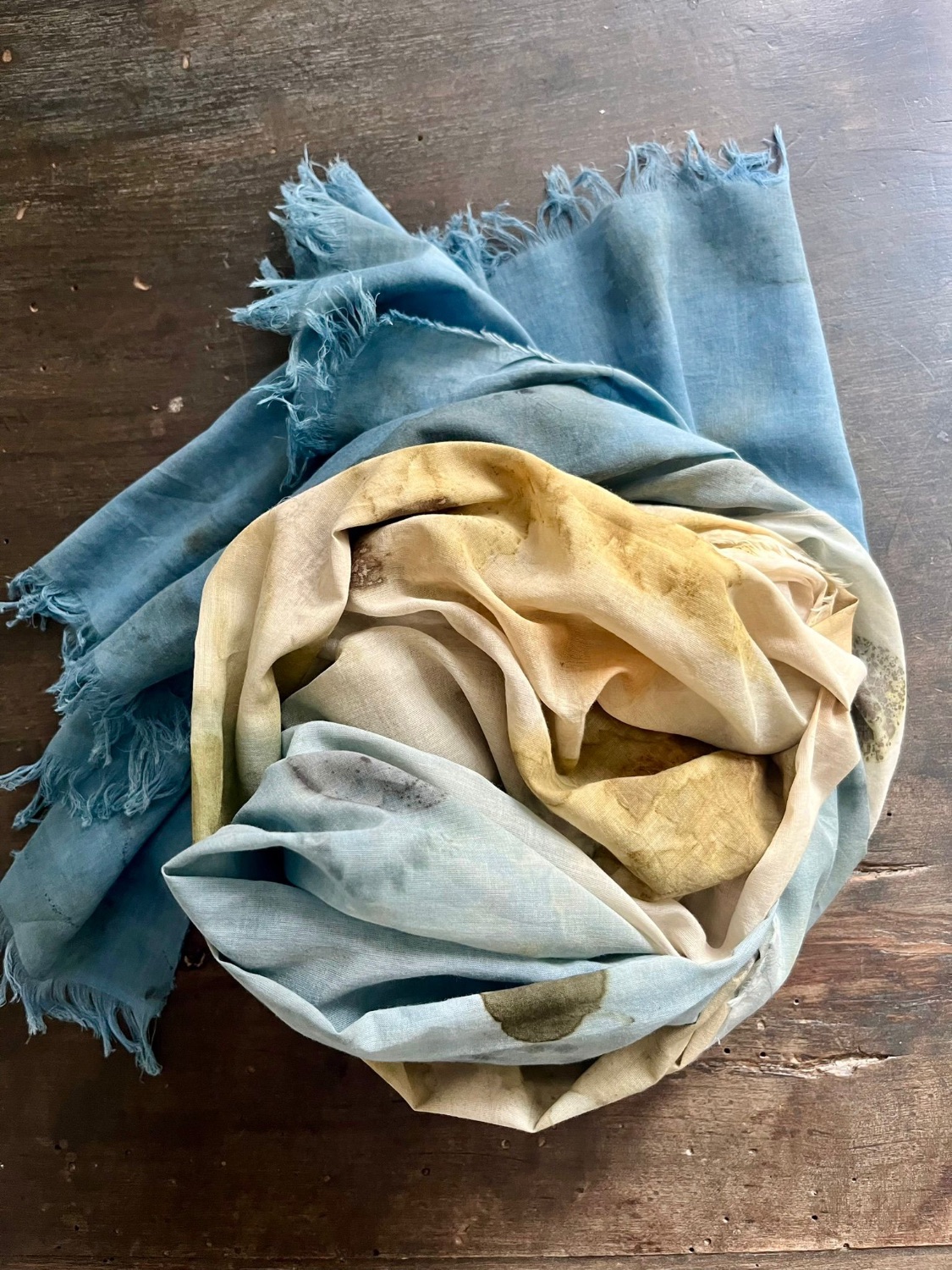
You rinse until the water runs clear.
Cold water, at length, without industrial soap, until it comes out clear. Then the colour settles by itself over the next twenty-four hours: what you see straight out of the vat is not yet the final colour. This is the moment the true worth of a dye appears: it shows only once the water runs clear, because what stays on the fibre is colour truly bound, not colour merely laid on top.
— Cold water. Twenty-four hours to settle.
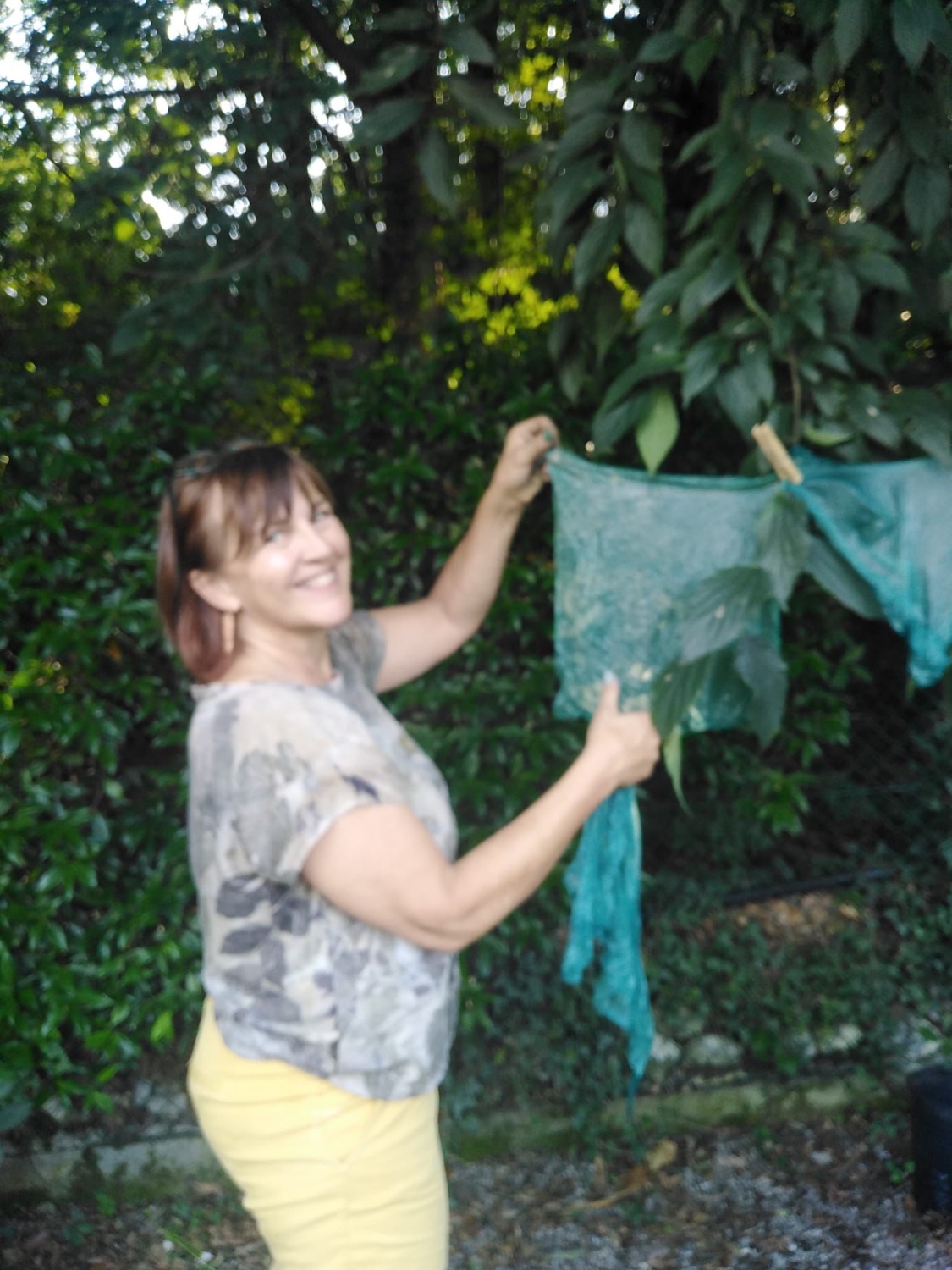
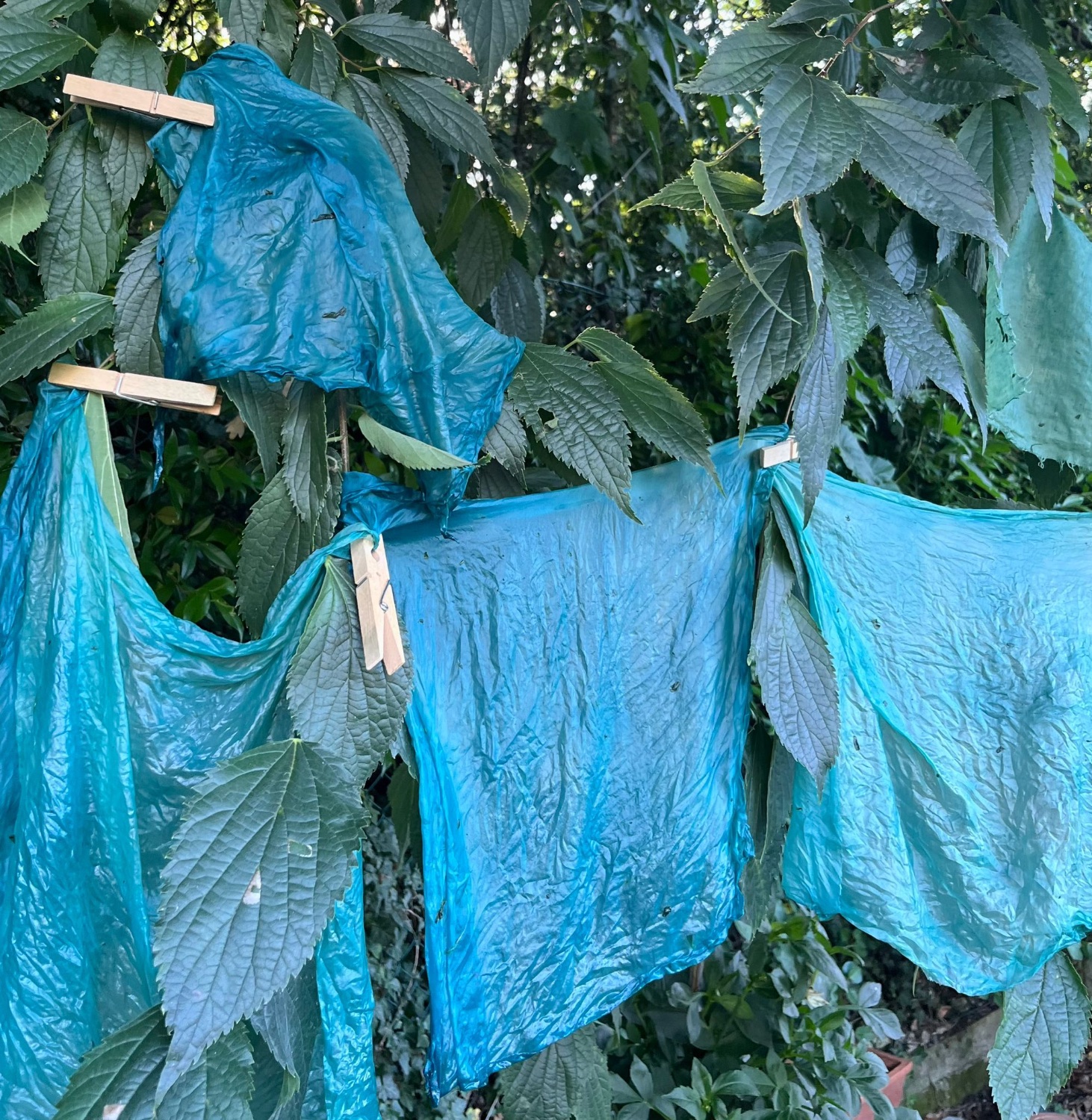
You lay it out in the shade, to dry slowly.
Plant-dyed silk cannot take direct sun: it shifts, pales, loses depth. We lay it flat in the shade, on a white cloth, for two or three days. When it is ready we press it with low steam. Only then is the colour truly its own.
— Shade, two or three days, low steam.
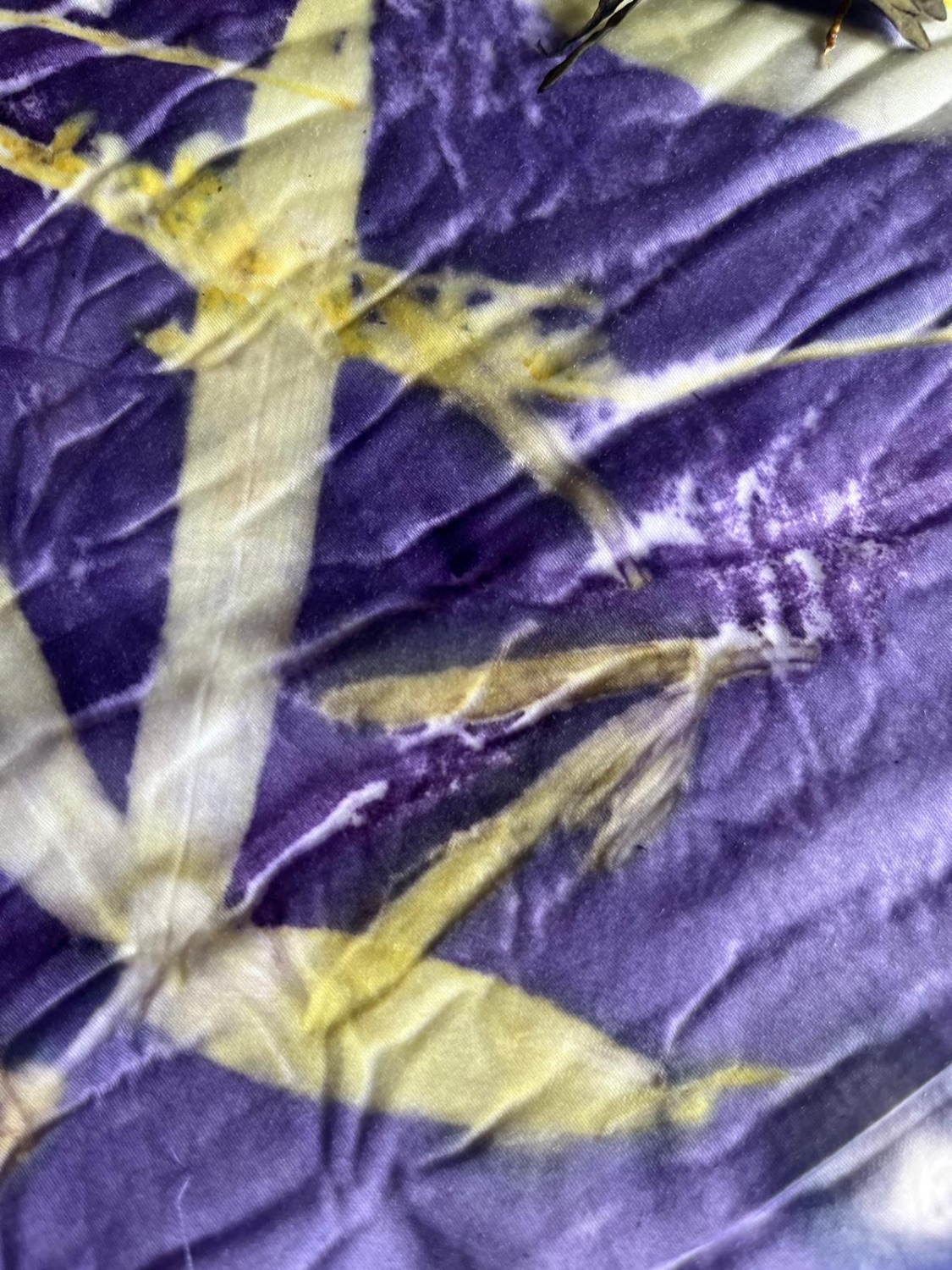
The leaf leaves its own drawing.
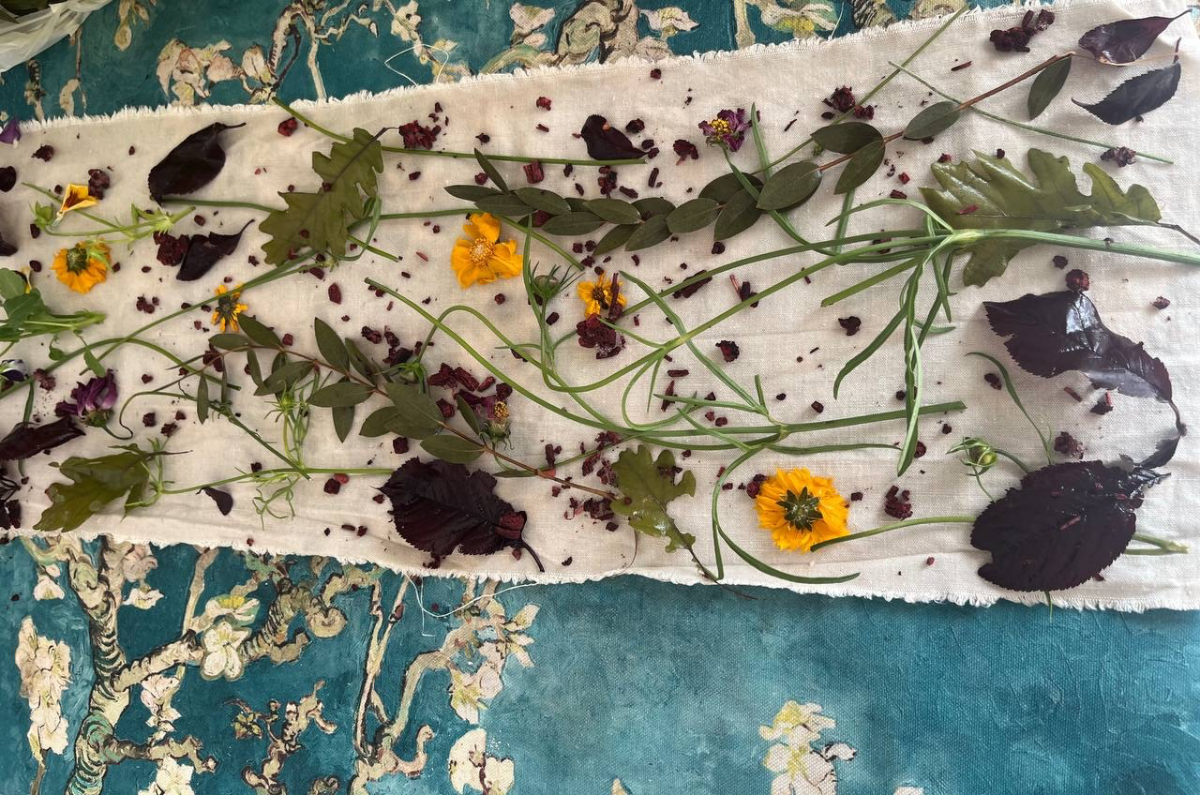
In botanical printing the real leaves are laid on the silk one by one, the whole is rolled onto a stick and steamed. When it is opened, the shape of the leaf remains on the cloth — veins and all.
In bath dyeing, by contrast, the colour is even: the cloth goes into the vat and takes the tone of the decoction. Often we use both techniques on the same piece: first the ground, then the drawing.
- Technique
- Fresh leaves, rolled and steamed
- Plants
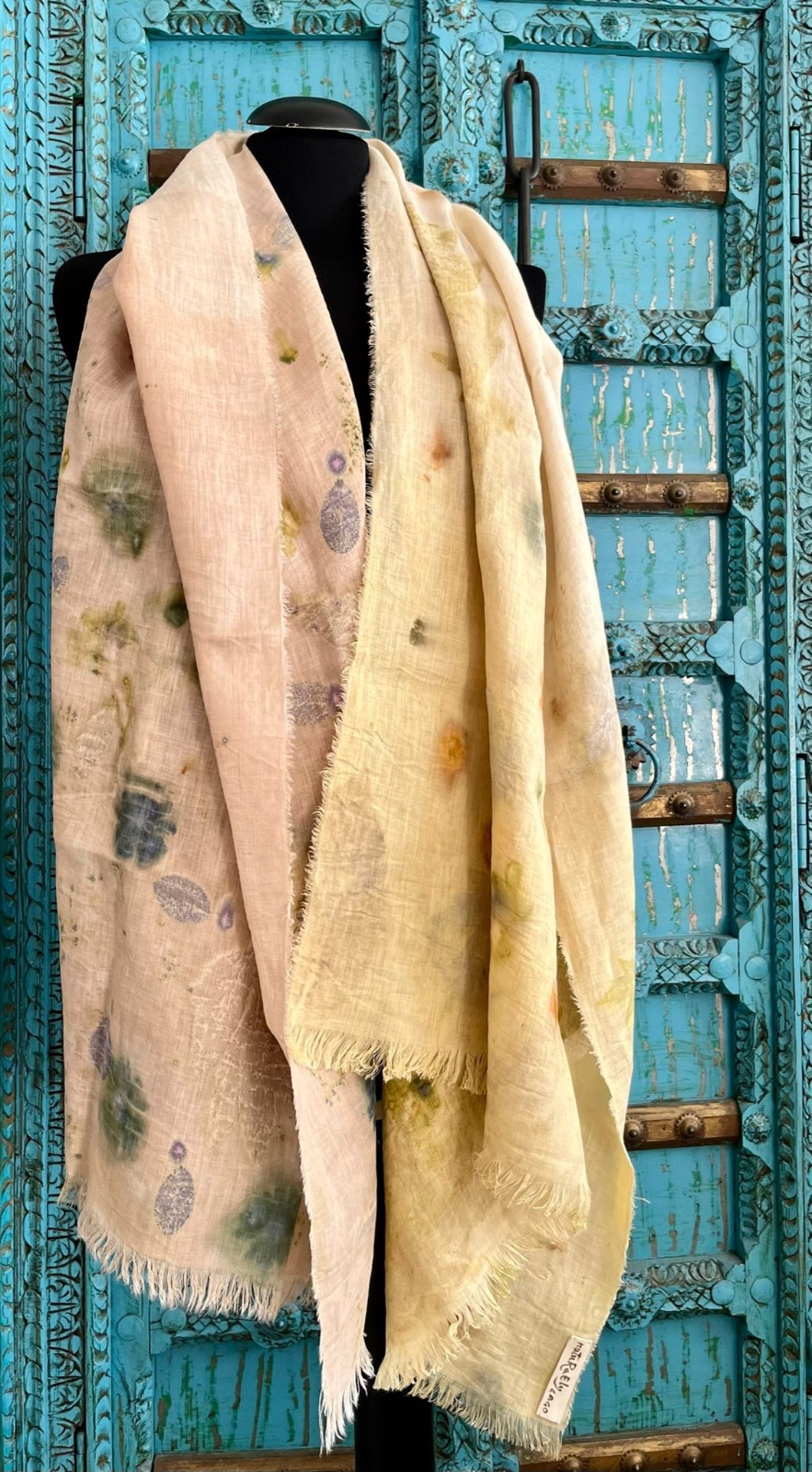
- Flowers, bark and leaves: bamboo, maple, oak, eucalyptus
- Result
- Every piece is unrepeatable
Open workshops
in the atelier, on Lake Garda.
Once a month we open the atelier for plant-dye workshops on silk: an afternoon, a full day or a weekend, four people at most around the same table.
You take home the scarf you dyed yourself, the card of the plant you used, and a clear idea of how it is done.
How to wash a plant-dyed silk.
Cold water, a neutral soap, no wringing and no direct sun: a silk dyed with plants will last for decades, if it is treated for what it is. We have written it all down, step by step.
Read the guide